
- NATURE
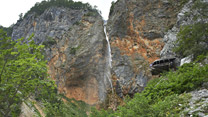
- Waterfalls
- The Logar Valley Trail
- The Savinja river and its tributaries
- Exceptional trees
- Alpine flowers
- Animals
- Natural values
- Natura 2000
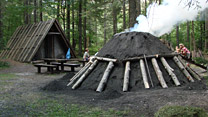
A large part of the area is protected
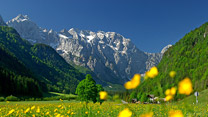
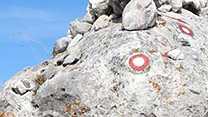
Logarska dolina and Robanov Kot Landscape Parks are natural heritage sites of national importance and form part of the Natura 2000 European network of protected areas.
Natura 2000
76% of the area is protected under the Natura 2000 network.
The Solčava Region is covered by two Natura 2000 protected areas,
- Grintovci and
- the Kamnik-Savinja Alps,
which overlap to a large extent..
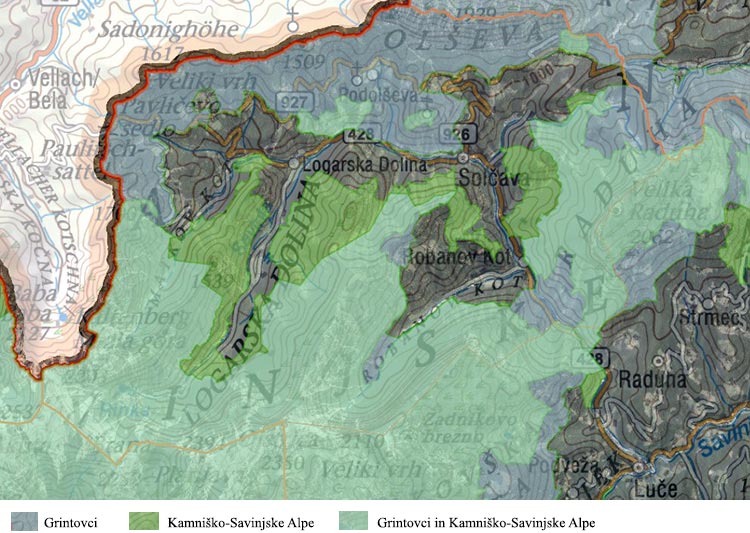
Grintovci
(Special Protection Area (SPA), bird protection)
The area is sparsely populated, with forests forming the predominant habitat. Owing to its highly diverse landscape, the forest composition is exceptionally varied. Above the tree line, extensive stands of dwarf mountain pine spread across the slopes, gradually giving way to alpine grasslands and rocky terrain at higher elevations.
The areas above the tree line provide habitat for several rare bird species, including the rock ptarmigan (Lagopus muta). The inaccessible cliffs rising above the valleys are nesting sites for the peregrine falcon (Falco peregrinus) and the golden eagle (Aquila chrysaetos).
The area is known for its important populations of the black grouse (Lyrurus tetrix) and relatively numerous populations of the western capercaillie (Tetrao urogallus), hazel grouse (Tetrastes bonasia), Boreal owl (Aegolius funereus), Eurasian pygmy owl (Glaucidium passerinum), and Eurasian three-toed woodpecker (Picoides tridactylus).
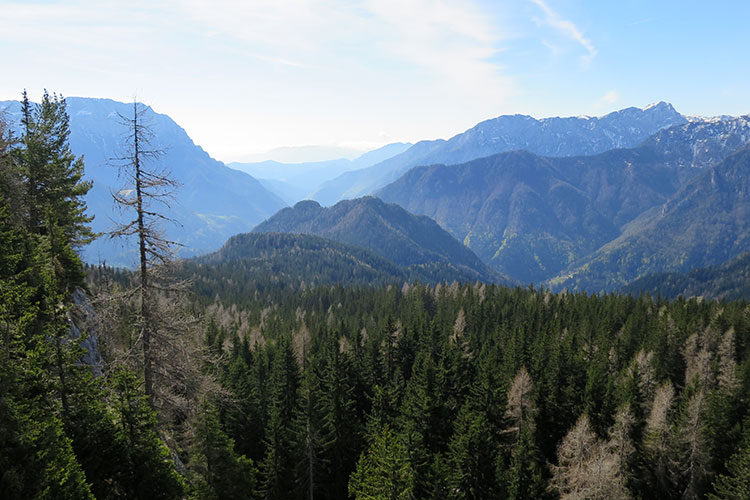
Kamnik-Savinja Alps
(Special Area of Conservation (SAC), habitat protection)
The diverse geological structure and varied topography provide favourable conditions for numerous threatened plant and animal species, as well as a range of habitat types. The area is home to Illyrian beech forests and smaller stands of Dinaric Scots pine forests, together with forest-dependent species such as the lesser horseshoe bat (Rhinolophus hipposideros), Western barbastelle (Barbastella barbastellus), and Jersey tiger moth (Euplagia quadripunctaria).
Above the tree line, habitats include calcareous alpine grasslands, calcareous rocky grasslands, dwarf mountain pine scrub, heaths, and scree slopes. South of Mount Skuta lies a picturesque karst landscape featuring limestone pavements, caves, and shafts, while a small glacier survives on the mountain's northern side.
Several mountain pastures with traditionally managed extensive montane meadows and grazing land have also been preserved. Within the area, the forests provide habitats for the lady's slipper orchid (Cypripedium calceolus), grasslands support the marsh gladiolus (Gladiolus palustris), and higher-altitude rocky habitats are home to Bertoloni's aquilegia (Aquilegia bertolonii) and Zois' bellflower (Campanula zoysii).
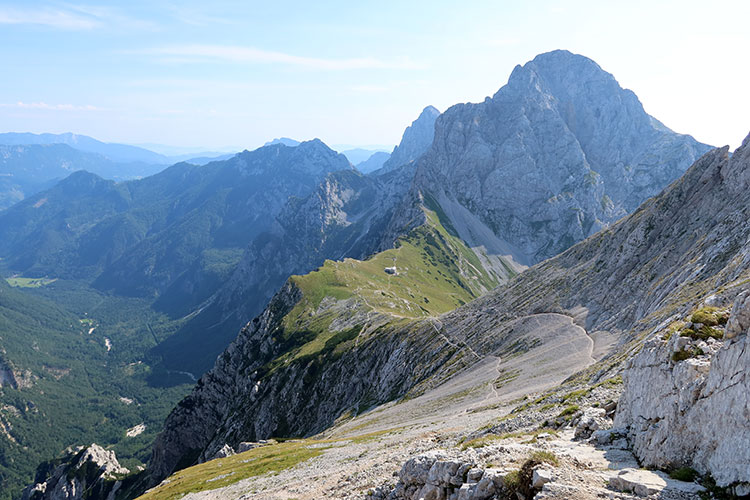
Data source: Nature Conservation Atlas (Naravovarstveni atlas)








TIC Logarska dolina
Visitor Information about the Park
Logarska dolina 9, 3335 Solčava, Slovenia
T: +386 (03) 838 9004
E: logarska-dolina@solcava.si
Zavod Logarska dolina
E: info@logarska-dolina.com
TIC CENTER RINKA, Solčava
Tourist Information and Programs,
Exhibitions, Local Products, Local Guides
Solčava 29, 3335 Solčava, Slovenia
T: +386 (0)3 839 07 10
E: info@solcavsko.info
www.logarska-solcavsko.si


 OBČINA SOLČAVA, 2026, All rights reserved